By Sonya.McGuire March 25, 2026
The rise of video-driven platforms, digital marketing, online education, and interactive media has made video one of the most influential communication tools of the modern era. From brand storytelling and online learning to entertainment and social media, video content plays a central role across industries. As a result, pursuing a digital video production career has become an appealing option for creatives seeking both artistic expression and practical career outcomes.
However, entering this field requires more than creativity alone. A successful career in digital video production involves developing technical skills, understanding production workflows, building a portfolio, and following structured learning and career pathways. This blog explores how aspiring creatives can start and grow a career in digital video production, outlining essential skills, common job roles, and realistic pathways into the industry.
Understanding Digital Video Production as a Career Path
A digital video production career focuses on creating video content for digital platforms rather than traditional broadcast media alone. This includes content produced for websites, social media, digital advertising, corporate communications, online education, and interactive media.
Unlike traditional film production careers that may involve large crews and lengthy production cycles, digital video production often requires versatility. Professionals are expected to manage multiple stages of the process, from concept development to editing and final delivery, often working in fast-paced digital environments.
This adaptability makes digital video production suitable for creatives who enjoy hands-on work, continuous learning, and working across different types of projects and industries.
Why Digital Video Production Is a Viable Creative Career
The demand for video content continues to grow as organisations prioritise digital engagement. Video is widely used to explain products, share information, tell stories, and connect with audiences in meaningful ways. This widespread adoption has created a broad range of video editor jobs and digital production roles across sectors.
Digital video production careers appeal to creatives because they combine storytelling, visual design, technical execution, and problem-solving. The skills developed are transferable, allowing professionals to move between roles, industries, or even freelance opportunities over time.
Importantly, digital media does not rely on a single career trajectory. Instead, it offers multiple entry points and growth paths, making it accessible to beginners who are willing to learn and build experience progressively.
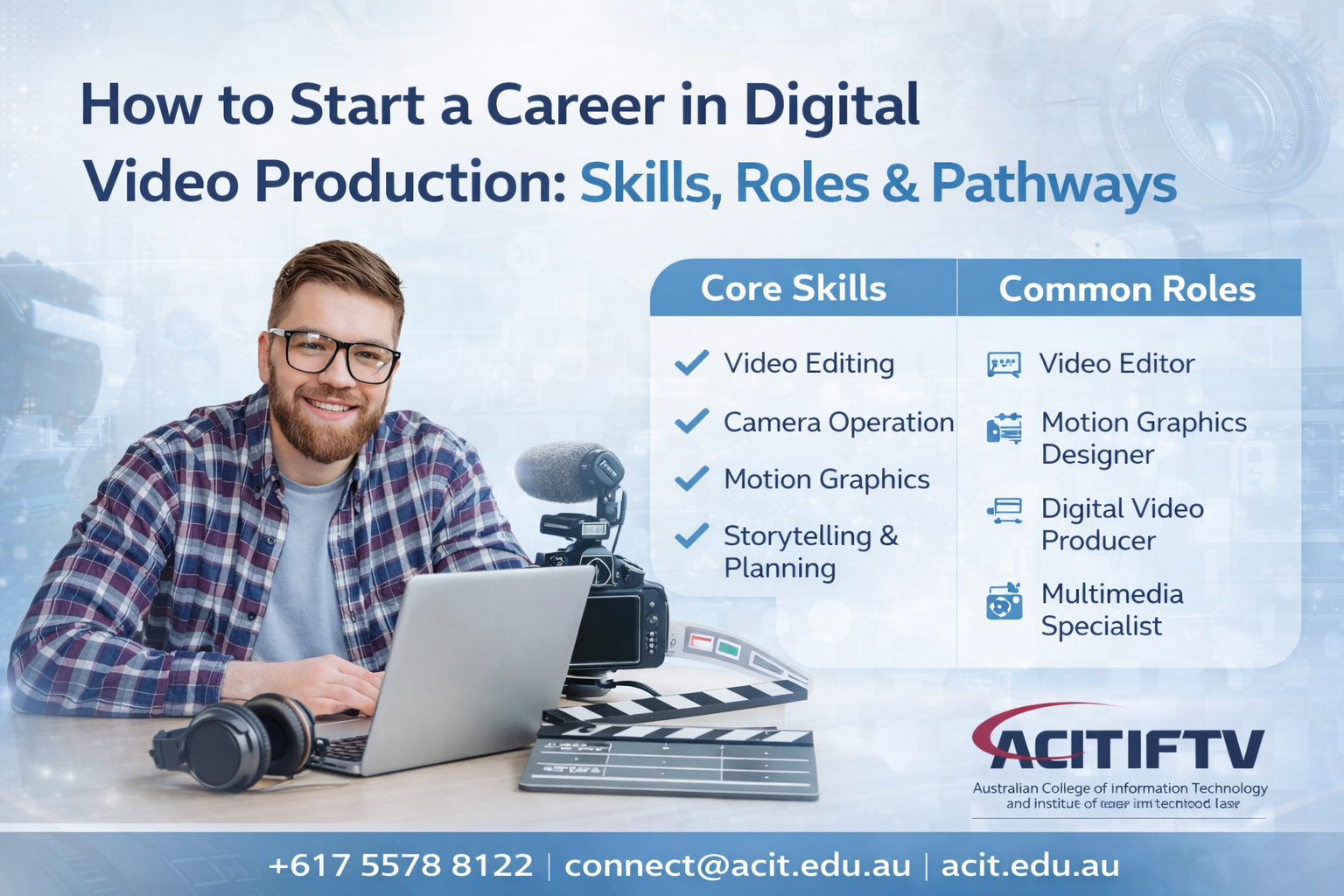
Core Skills Needed for a Digital Video Production Career
Technical Video Skills
At the foundation of any digital video production career are technical competencies. These include:
- Video editing techniques and workflows
- Understanding camera operation, framing, and composition
- Audio recording and sound synchronisation
- Exporting and formatting video for different digital platforms
Professionals must be comfortable using industry-standard software and tools to assemble raw footage into polished content. While tools may evolve, the underlying principles of editing and production remain consistent.
Motion Graphics and Visual Design
Modern video content often incorporates animated elements, titles, transitions, and visual effects. Skills in motion graphics and screen-based graphic design enhance a creator’s ability to produce engaging digital videos.
Understanding typography, colour theory, visual balance, and animation principles allows creators to improve storytelling and brand alignment across projects.
Storytelling and Content Planning
Beyond technical execution, digital video production relies heavily on storytelling. This includes:
- Developing clear concepts and messages
- Structuring content for specific audiences
- Storyboarding and planning visual sequences
- Maintaining narrative flow and pacing
Effective storytelling ensures that video content is purposeful and engaging rather than visually impressive but unfocused.
Project and Workflow Management
Digital video projects often involve deadlines, client briefs, and collaborative environments. Skills in planning, organising assets, and managing production timelines are essential.
Understanding workflows, from pre-production to post-production, helps creatives work efficiently and adapt to professional settings.
Ethical, Legal, and Workplace Awareness
Professional video production requires awareness of copyright, intellectual property, and ethical content use. Creators must understand how to legally source footage, music, and assets while respecting privacy and confidentiality.
Additionally, workplace health and safety knowledge is essential, particularly when working with equipment, studio setups, or collaborative environments.
Common Job Roles in Digital Video Production
A digital video production career can lead to various entry-level and intermediate roles, depending on skills and interests.
Video Editor
Video editors focus on assembling footage, audio, and graphics into cohesive digital content. Video editor jobs are common entry points and exist across marketing agencies, media companies, educational institutions, and corporate environments.
Editors must balance creativity with technical precision, ensuring content meets platform specifications and audience expectations.
Digital Video Producer
Digital video producers oversee the entire production process, from planning and filming to editing and delivery. This role often involves coordinating resources, managing timelines, and ensuring the final output aligns with project goals.
Producers may work independently on smaller projects or collaborate with teams on larger productions.
Motion Graphics Designer
Motion graphics designers specialise in animated visuals used in digital videos. This role suits creatives with a strong interest in animation, design, and visual storytelling.
Motion graphics skills are particularly valuable in marketing, education, and online media.
Interactive Media or Multimedia Specialist
Some roles focus on interactive or multimedia video content, integrating user engagement elements and digital storytelling techniques. These positions blend video production with creative problem-solving and technical design.
Entry-Level Film and Media Roles
While digital video production differs from traditional film production careers, the skills gained can support entry-level roles in broader media environments. These may include production assistants or junior content creators working within digital-first teams.
Career Pathways Into Digital Video Production
Formal Study and Structured Learning
One of the most effective ways to start a digital video production career is through structured education that focuses on practical skills and real-world projects.
Courses such as ACIT’s Certificate IV in Information Technology – Digital Video Production provide learners with guided exposure to video editing, motion graphics, interactive video, and professional workflows. This structured approach allows students to develop foundational competencies while building a portfolio of work.
Formal study also ensures alignment with industry standards, ethical guidelines, and workplace practices relevant to digital production environments.
Portfolio Development
In digital video production, a portfolio is a critical career asset. Employers and collaborators often assess skills based on demonstrated work rather than theoretical knowledge alone.
Portfolios typically include:
- Edited video projects
- Motion graphics and animations
- Short-form digital content samples
- Concept and storyboard examples
Structured courses help students develop portfolio pieces through supervised projects and feedback-driven improvement.
Entry-Level Experience and Junior Roles
After completing foundational training, many creatives enter the industry through junior or assistant roles. These positions allow individuals to apply skills in real-world settings while learning from experienced professionals.
Entry-level experience helps refine workflows, improve efficiency, and develop professional confidence.
Continuous Skill Development
Digital video production is a constantly evolving field. Professionals who continue learning, whether through advanced courses, workshops, or self-directed practice, are better positioned for long-term career growth.
Developing additional skills in areas such as motion graphics, interactive media, or content strategy can open new opportunities within the creative industry.
How ACIT Supports Digital Video Production Pathways
ACIT’s Digital Video Production course is designed to support aspiring creatives through a structured, skills-based learning model. The program focuses on practical outcomes, guiding students through core areas such as video editing, motion graphics, graphic design for screen, interactive video production, and professional compliance topics.
The course emphasises project-based learning, allowing students to produce digital video content that reflects industry expectations. This approach supports portfolio development and prepares learners for realistic production environments.
By combining technical training with ethical and workplace awareness, ACIT helps students transition from creative interest to professional capability within digital video production pathways.
Building a Sustainable Career in Digital Video Production
A digital video production career offers flexibility, creative fulfilment, and opportunities across multiple industries. However, long-term success depends on adaptability, continuous learning, and professional discipline.
Creatives who invest in structured education, develop strong portfolios, and understand production workflows are better equipped to navigate the evolving digital landscape.
Rather than focusing on a single job title, many professionals build careers by expanding their skill sets and exploring diverse roles over time. This adaptability allows digital video production careers to remain relevant even as platforms and technologies change.
Conclusion
Starting a career in digital video production requires a balance of creativity, technical skill, and practical experience. By developing core competencies in editing, motion graphics, storytelling, and production workflows, creatives can access a wide range of career opportunities across digital industries.
A digital video production career is not defined by one fixed path but by continuous growth, learning, and portfolio development. Structured education programs, such as those offered by ACIT, provide a solid foundation for aspiring professionals to enter the field with confidence and clarity.
For creatives seeking a career that blends visual storytelling with real-world application, digital video production offers a practical and rewarding pathway into today’s digital economy.
Frequently Asked Questions
- Is digital video production more technical or creative as a career?
Digital video production balances both creativity and technical execution. While creativity drives storytelling and visual style, technical accuracy ensures content meets platform standards and professional expectations.
- How long does it usually take to feel confident working on professional video projects?
Confidence typically develops through consistent practice and feedback. Structured learning environments and supervised projects help students build confidence faster than self-directed learning alone.
- Can digital video production be pursued alongside other creative disciplines?
Yes. Many professionals combine video production with photography, graphic design, or content marketing, allowing them to contribute to projects in multiple creative capacities.
- What type of work environment do digital video production professionals usually work in?
Digital video producers may work in studios, creative agencies, corporate offices, educational institutions, or remote settings. The environment often varies depending on project scope and team size.
- How important is feedback in developing video production skills?
Feedback is essential for growth. Constructive critique helps creatives refine technical accuracy, storytelling effectiveness, and audience engagement, leading to higher-quality outcomes over time.
- Do digital video production careers require expensive equipment to get started?
Entry-level learning and practice can begin with basic equipment and software. As skills progress, professionals gradually upgrade tools based on project needs and industry expectations.
- How can creatives stay relevant as video platforms and trends change?
Staying relevant involves continuous learning, experimenting with new formats, and adapting storytelling techniques to evolving platforms while maintaining strong foundational production skills.