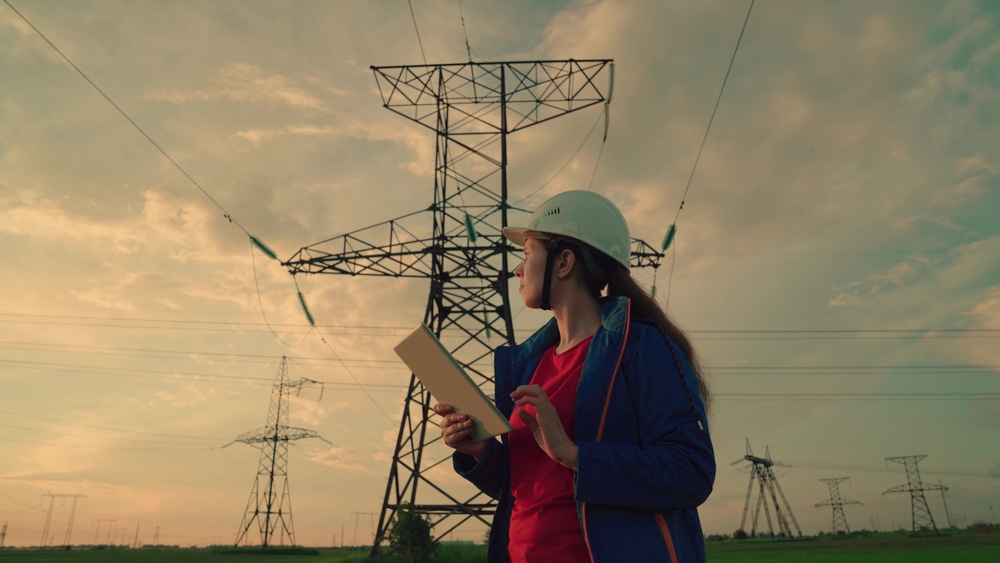
UEE30820 Certificate III in Electrotechnology Electrician

Australian College of Information Technology & Institute of Film and Television|UEE30820 Certificate III in Electrotechnology Electrician

COURSE OVERVIEW

The UEE30820 Certificate III in Electrotechnology Electrician is the primary qualification required for an Unrestricted Electrician’s License in Australia, serving as the technical foundation for the nation’s electrical regulatory framework. The course is strictly aligned with the AS/NZS 3000:2018 Wiring Rules and provides the essential theoretical and practical competencies mandated by state regulators. By integrating the core “spines” of Electrical Principles and Electrical Wiring Practice with modern digital resources, the program ensures that students meet the rigorous standards necessary for safe, compliant, and professional practice in residential, commercial, and industrial sectors.

The curriculum is structured into nine specialized subjects that guide students from fundamental safety and physics to advanced industrial automation. Initial subjects focus on Workplace Induction, Fundamental Theory, and Mechanical Fabrication, where students master life-saving skills like CPR and LV rescue while learning the mechanics of circuit behaviour and cable termination. As the course progresses, students explore AC Circuits, Magnetism, and Electrical Machines, gaining the ability to test and connect transformers and three-phase motors—skills that are critical for maintaining the heavy electrical infrastructure of modern industry.

The final stages of the qualification emphasize high-level design, programming, and legal compliance. Students learn to program PLC Control Circuits for automation and master Installation and Wiring Systems through complex maximum demand and cable selection calculations per AS/NZS 3008. The course culminates in Performance Evaluation and Compliance, where students develop systematic fault-finding techniques and learn to perform the mandatory verification testing sequence. This final phase ensures that every graduate can confidently sign off on an installation’s safety and functionality, fulfilling their legal obligations within the Australian electrical licensing system.

The learning journey is supported by high-quality video resources, interactive eLearning modules, and extensive hands-on practical workshops to ensure you are not just “exam-ready,” but “site-ready.”

Program Context
The electro-technology sector in Australia is currently facing a critical and structural shortfall that is expected to intensify through 2026 and beyond. This gap is driven by a “perfect storm” of high demand from the renewable energy transition, a booming construction sector, and an aging workforce. The most recent impact is the massive surge in data centre construction. Because AI processing (inference and training) requires significantly more power than traditional cloud computing, it is changing the physical requirements of the industry.

CURRICULUM

This foundational subject provides a comprehensive entry point into the Australian electrotechnology industry. It balances a high-level view of industry structure and environmental sustainability with the rigorous, life-saving technical skills required to manage workplace risks. Students move from theoretical safety legislation to practical, hands-on rescue and resuscitation techniques.

Topics include:

  • Sustainable Practices: Applying environmentally sound procedures for energy efficiency and waste management. 

  •  Industry Framework: Understanding the sectors within electrotechnology and the role of regulatory bodies.

  •  WHS Legislation: Interpreting the Work Health and Safety Act and its application to electrical contracting.

  • Life-Saving Skills: Performing CPR (HLTAID009) and executing Low Voltage (LV) panel rescue procedures.

  • Risk Mitigation: Identifying hazards, conducting Job Safety Analyses (JSA), and implementing Lock-Out Tag-Out (LOTO).

This subject strips electricity down to its physical roots, providing the mathematical and scientific “why” behind electrical behavior. You will learn to navigate the core relationship between voltage, current, and resistance while mastering the technical literacy required to read and document the blueprints of the trade.

Topics include:

  • Electrical Physics: Mastery of atomic theory, electromotive force (EMF), and electron flow.

  • Ohm’s Law & Power: Calculating circuit parameters and understanding the relationship between Work, Power, and Energy.

  • Circuit Configuration: Analyzing the characteristics of series and parallel single-path DC circuits.

  • Technical Documentation: Interpreting architectural floor plans, circuit schedules, and symbols per AS/NZS 1102.

  • Engineering Software: Introduction to using digital tools for documentation and basic circuit simulation.

Electrical work is as much a mechanical trade as it is a theoretical science. This subject focuses on the physical installation of equipment, teaching you how to select the right fixings for different building materials and how to manipulate conduits and cables to create professional, compliant installations.

Topics include:

  • Tool Mastery: Safe and effective use of hand and power tools specific to the electrical trade.

  • Fabrication Techniques: Cutting, bending, and joining PVC and metallic conduits and trunking.

  • Fixing & Securing: Selecting masonry anchors, cavity fixings, and chemical anchors based on weight and substrate.

  • Termination Excellence: Mastering the techniques for stripping and terminating power cables and flexible cords.

  • Soldering: Applying soft soldering techniques for permanent electrical connections.

Most modern electrical infrastructure operates on Alternating Current. This subject transitions you from DC to AC, exploring the complex world of magnetism, induction, and phase relationships. You will learn to solve circuit problems where resistance is joined by reactance and impedance.

Topics include:

  • Electromagnetism: Understanding flux density, reluctance, and the operation of solenoids and relays.

  • AC Fundamentals: Analyzing sine waves, frequency, RMS values, and phase angles.

  • Reactance & Impedance: Calculating the effects of capacitors and inductors in AC circuits.

  • Power Factor: Understanding the “efficiency” of an AC circuit and the methods for power factor correction.

  • Phasor Diagrams: Using vector diagrams to represent and solve complex AC circuit values.

This subject brings electrical theory into motion. By studying machines and transformers, you will understand how electricity is converted into mechanical force and how voltage levels are stepped up or down for distribution. You will learn the practicalities of connecting and testing these critical components.

Topics include:

  • Transformer Principles: Calculating turns ratios, voltage regulation, and efficiency in single and three-phase transformers.

  • DC Machine Dynamics: Exploring the construction and operation of series, shunt, and compound DC motors.

  • AC Rotating Machines: Mastering three-phase induction motors, including Star and Delta connection methods.

  • Motor Control: Understanding and wiring basic motor starters, including Direct-on-Line (DOL) and Forward/Reverse.

  • Testing Procedures: Performing insulation resistance and continuity tests on windings.

At the heart of an electrician’s license is the ability to design and install wiring systems that are safe and efficient. This subject focuses heavily on the “Bible” of the trade—the AS/NZS 3000 Wiring Rules—ensuring you can select the correct cable size and protective device for any given load.

Topics include:

  • Maximum Demand: Calculating the total load of an installation using the “General Method” and “Individual Assessment.”

  • Cable Selection: Using AS/NZS 3008 to select cables based on current-carrying capacity and environmental factors.

  • Voltage Drop Compliance: Ensuring circuits maintain sufficient voltage for appliance functionality over long distances.

  • Wiring Systems: Selecting and installing enclosures, including underground conduits and aerial supports.

  • Final Sub-Circuits: Designing the layout and protection (RCDs/MCBs) for lighting, power, and appliance circuits.

As industry moves toward “Industry 4.0,” the ability to program control systems is essential. This subject introduces you to the brain of modern industrial machinery: the Programmable Logic Controller. You will learn to replace traditional hard-wired logic with flexible, software-based control.

Topics include:

  • PLC Architecture: Understanding CPU, I/O modules, and the interface between hardware and software.

  • Ladder Logic (Discrete): Programming basic start/stop, interlocking, and timer/counter functions.

  • Analogue Control: Handling variables like temperature and pressure through analogue input and output signals.

  • Control Circuit Components: Integrating sensors, limit switches, and contactors into automated systems.

  • Program Verification: Testing and debugging programs to ensure safe machine operation.

A high-level electrician is a professional detective. This subject teaches you how to systematically diagnose problems in existing installations. You will learn how to verify that appliances and circuits are performing to specification and how to safely find the “needle in the haystack” when a circuit fails.

Topics include:

  • Diagnostic Methodology: Applying the “Half-Step” and “Input-Output” methods to locate electrical faults.

  • Heating Equipment: Evaluating the performance and controls of water heaters and space heating.

  • Lighting Evaluation: Assessing lighting levels and troubleshooting dimming and control systems (e.g., DALI).

  • Socket Outlet Verification: Testing for correct polarity and earth loop impedance.

  • Safe Isolation: Mastering the “Test-Before-You-Touch” procedure during troubleshooting.

The final subject is where everything comes together for commissioning. You will learn the legal requirements for “signing off” on a job, ensuring the installation is safe for the consumer. This includes specialized knowledge in alternate energy sources and the final verification of the M.E.N. (Multiple Earthed Neutral) system.

Topics include:

  • Mandatory Testing: Executing the six mandatory tests required by AS/NZS 3000 before energizing an installation.

  • Visual Inspection: Developing a keen eye for compliance issues in switchboards and wiring.

  • Alternate Supplies: Understanding the safety and isolation requirements for Solar PV and UPS systems.

  • M.E.N. System Integrity: Verifying the crucial bond between the neutral and earth at the main switchboard.

  • LV Panel Rescue Refresher: Final assessment of emergency response competency to ensure site-readiness.
LEVEL
INTERMEDIATE
QUALIFICATION
UEE30820
DURATION
STUDY WEEKS: 54 HOLIDAYS: 24
TOTAL WEEKS: 78
DURATION
STATE
QUEENSLAND
BRANCH
GOLD COAST
SEATS AVAILABLE
50
DOMESTIC FEES
INTERNATIONAL FEES
COE PAYMENT
$200

Apply for Scholarship

International Students
Domestic Students (Australian Residents only)

ENTRY REQUIREMENTS

INTERNATIONAL STUDENTS
Language Proficiency:
Native English or IELTS 6.0
Academic Background:
– Australian Year 12 or equivalent

Australian College of Information Technology & Institute of Film and Television|UEE30820 Certificate III in Electrotechnology Electrician

Course Categories

Enroll now

International Students
Domestic Students (Australian Residents only)

EXPLORE

What past students say about us

Australian College of Information Technology & Institute of Film and Television | UEE30820 Certificate III in Electrotechnology Electrician
Shivraj Mavani

I had an amazing experience at college. The courses were challenging and engaging, and I particularly enjoyed my classes in CCNA and Data Centre. The professors were knowledgeable and passionate about their subjects, and they always encouraged us to think critically and creatively. Overall, my time in college was a truly transformative experience, and I feel grateful for all the opportunities it provided me.

Australian College of Information Technology & Institute of Film and Television | UEE30820 Certificate III in Electrotechnology Electrician
Eden Ivan Camacho

It was useful to have such a great instructor who was extremely knowledgeable. Thanks to ACIT team for the guidance throughout the course. I enjoyed every phase of the course, and I am sure I will apply everything what I've learned daily in my professional career. I cannot feel more thankful to the members of the team for the outstanding service and support.

Australian College of Information Technology & Institute of Film and Television | UEE30820 Certificate III in Electrotechnology Electrician
Rajwinder Kaur

I am very happy to share my experience with ACIT. I was not a very good student and was not regularly attending classes. But still with the support and help offered by ACIT staff is unbelievable. I really appreciate there efforts. I also want to recommend other students to choose ACIT for their future education. As for international students, you can get 5 extra points being offered in QLD’s regional colleges.

Australian College of Information Technology & Institute of Film and Television | UEE30820 Certificate III in Electrotechnology Electrician
Nicolas Vanin

Hi, my name is Nick. I completed a two-year course in Telecommunications and Networking at the Australian College of Information Technology (ACIT). The course provided strong foundations with engaging lectures, practical training, and experienced trainers. After graduating, I joined an organization where I manage the entire IT infrastructure, using the skills I learned at ACIT. The college also offered a supportive learning environment and helpful career guidance. Overall, my experience at ACIT was excellent, and I highly recommend it to anyone starting a career in IT.

Australian College of Information Technology & Institute of Film and Television | UEE30820 Certificate III in Electrotechnology Electrician
Maurya Shah

Excellent

Australian College of Information Technology & Institute of Film and Television | UEE30820 Certificate III in Electrotechnology Electrician
Nicko Jay Menecio

I completed my Advanced Diploma of Telecommunications Network Engineering at the Australian College of Information Technology (ACIT) in February 2022. The course provided strong practical knowledge, experienced trainers, and excellent lab facilities that helped me gain hands-on industry skills. Because of the training and support from ACIT, I was able to secure a job in the Wireless Telecommunications industry, which later helped me achieve permanent residency within a year of graduation. I highly recommend ACIT to anyone looking to build a successful career in telecommunications.

Australian College of Information Technology & Institute of Film and Television | UEE30820 Certificate III in Electrotechnology Electrician
Rajwinder Rupin Kaur

I had a wonderful experience studying here. All staff members are really nice and helpful.

Australian College of Information Technology & Institute of Film and Television | UEE30820 Certificate III in Electrotechnology Electrician
Anshul Anshul

Studied 2 years in the ACIT. All of the staff was very supportive and they have very good understanding with the students. Teachers were always ready to help me with my doubts and pointed me in to the right direction. Am very happy and proud to be an alumnus of such an institution

Australian College of Information Technology & Institute of Film and Television | UEE30820 Certificate III in Electrotechnology Electrician
Vikaskumar Joshi

High Supportive College

Australian College of Information Technology & Institute of Film and Television | UEE30820 Certificate III in Electrotechnology Electrician
Keem Jayve Tan

I am grateful for the excellent learning experience I had at ACIT. The course provided a strong mix of theoretical knowledge and practical training, supported by dedicated trainers and modern lab facilities. This helped me develop important technical skills and prepare for a successful career in Telecommunications Network Engineering. Overall, my time at ACIT was highly valuable and played a key role in my professional growth.

Australian College of Information Technology & Institute of Film and Television | UEE30820 Certificate III in Electrotechnology Electrician
Shawn Yari

It was a Great experience for me with achieving a good qualifications for my future career

Australian College of Information Technology & Institute of Film and Television | UEE30820 Certificate III in Electrotechnology Electrician
Sonam Yozer

The teaching staff was great and professional. The staff was knowledgeable and always available to resolve any issue. One suggestion would be to use updated equipment in school.

Australian College of Information Technology & Institute of Film and Television | UEE30820 Certificate III in Electrotechnology Electrician
LI PING SIU

As a student with no IT background at all, I really felt very painful at the beginning of this course, but I think the teachers really gave me a lot of support, once I had any questions, they would patiently give explanations and guide me, although my journey of studying was longer than my classmates , but finally finished, I feel very grateful!

Top