By Sonya.McGuire March 25, 2026
The digital economy has transformed how organisations communicate, market, and engage with audiences. From websites and social media to video platforms and interactive media, creative digital content is now central to almost every industry. As a result, many creative learners ask an important question: what digital content production careers are available after completing formal study?
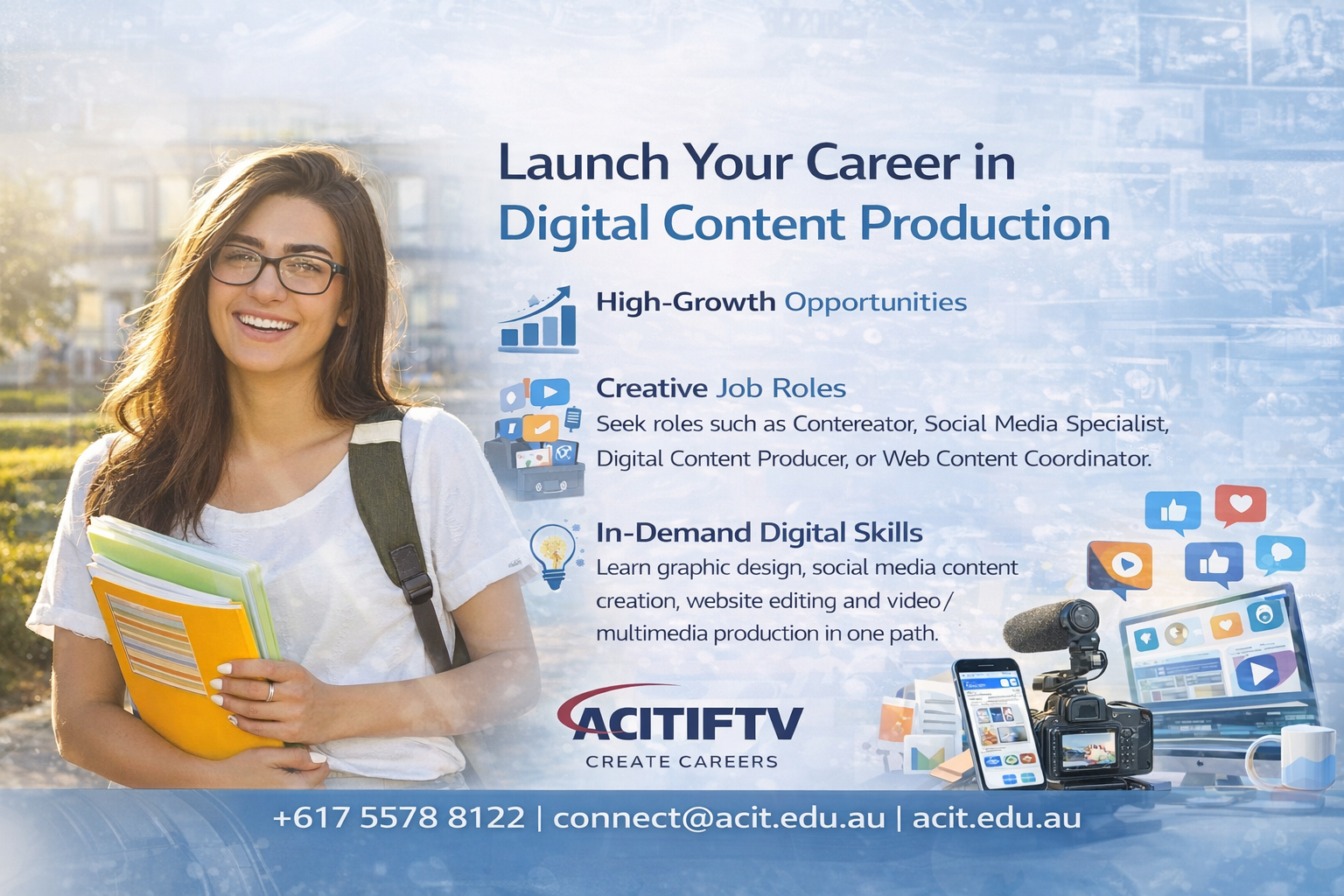
For students with an interest in creativity, storytelling, design, and technology, studying Digital Content Production offers a practical pathway into a wide range of modern creative careers. This blog explores the career roles you can pursue, the skills employers look for, and the growing demand for digital content professionals; particularly for graduates of structured vocational programs like the Certificate IV in Information Technology – Digital Content Production at ACIT.
Understanding Digital Content Production as a Career Path
Digital content production refers to the creation of visual, written, and interactive materials designed for digital platforms. This includes:
- Social media content
- Website graphics and layouts
- Digital videos and interactive media
- Online marketing assets
- Multimedia storytelling
Unlike traditional creative disciplines that focus on a single medium, digital content production combines creativity with technical skills, allowing professionals to work across platforms and formats.
Studying this field equips learners with industry-ready skills that can be applied in marketing, media, communications, education, retail, and many other sectors.
Why Digital Content Production Careers Are in Demand
The demand for digital content professionals continues to grow due to several factors:
- Businesses prioritising online presence and digital marketing
- Increased reliance on social media and video content
- Growth of e-commerce and digital branding
- Need for in-house creative teams across industries
- Rise of content-driven communication strategies
Organisations are no longer looking for “just designers” or “just marketers.” Instead, they want multi-skilled digital content creators who can plan, produce, and publish content across platforms.
This shift has made digital content production careers both accessible and sustainable for creative students.
Core Skills Gained from Studying Digital Content Production
A major advantage of studying digital content production through a vocational qualification is the practical skill development. Graduates develop a balanced skill set that blends creativity, technology, and professional practice.
1. Visual Design & Graphic Communication
Students learn how to:
- Apply design principles (layout, colour, typography)
- Create graphics for web and social platforms
- Use industry tools such as Adobe Photoshop
- Design content aligned with brand guidelines
These skills are essential for roles involving visual storytelling and digital branding.
2. Social Media Content Creation
Social platforms are a major employer of digital creatives. Learners develop skills in:
- Planning social media content
- Creating platform-specific visuals and messaging
- Understanding audience engagement strategies
- Producing digital assets for campaigns
This directly supports content creator jobs and social media-focused roles.
3. Website Content & Basic Web Development
Digital content production students gain foundational skills in:
- HTML and CSS
- Structuring website pages
- Updating and managing web content
- Creating visually engaging layouts
This enables graduates to collaborate with developers or manage content within digital teams.
4. Video & Interactive Media Production
Video is one of the fastest-growing content formats. Students learn:
- Storyboarding and planning video content
- Filming and editing techniques
- Producing interactive and multimedia content
- Understanding video formats for digital platforms
These skills support careers in video content creation, media production, and digital storytelling.
5. Copyright, Ethics & Professional Practice
Understanding legal and ethical considerations is critical. Students learn about:
- Copyright and intellectual property
- Responsible content use and licensing
- Workplace health and safety in digital environments
This ensures graduates are professionally prepared for real-world creative roles.
Digital Content Production Careers You Can Start After Graduation
Completing a Digital Content Production qualification opens doors to a wide range of creative careers. Below are some of the most common roles graduates pursue.
1. Digital Content Producer
Role Overview:
Digital Content Producers plan, create, and manage content across digital platforms. They often work within marketing or communications teams.
Key Responsibilities:
- Creating visual and written digital content
- Coordinating content schedules
- Managing digital assets
- Ensuring brand consistency
Why This Role Is Popular:
It offers variety, creativity, and strong career growth across media industries.
2. Content Creator / Social Media Content Specialist
Role Overview:
Content creators produce platform-specific content for social media, websites, and online campaigns.
Key Responsibilities:
- Creating posts, graphics, and short videos
- Planning content calendars
- Analysing engagement performance
- Adapting content to platform trends
This role aligns directly with content creator jobs, one of the fastest-growing creative fields.
3. Graphic Designer (Digital Focus)
Role Overview:
Digital graphic designers specialise in creating visuals for online platforms rather than print.
Key Responsibilities:
- Designing website graphics
- Creating social media visuals
- Producing digital advertisements
- Supporting branding initiatives
Graduates with strong design skills and software experience are well suited to this role.
4. Web Content Coordinator
Role Overview:
Web Content Coordinators manage and update website content to ensure accuracy, usability, and engagement.
Key Responsibilities:
- Uploading and formatting content
- Working with design and marketing teams
- Ensuring content accessibility
- Maintaining brand and style guidelines
This role combines creativity with organisation and technical awareness.
5. Video Content Assistant / Multimedia Producer
Role Overview:
This role focuses on video and interactive media production for digital platforms.
Key Responsibilities:
- Assisting with filming and editing
- Producing short-form and long-form video
- Creating interactive digital content
- Supporting media production workflows
With video demand rising, this is a strong entry point into creative media careers.
6. Digital Marketing Assistant (Creative Focus)
Role Overview:
Many digital marketing roles require content production skills.
Key Responsibilities:
- Creating campaign visuals
- Supporting social media marketing
- Producing content for email and web
- Assisting with brand communication strategies
This role allows graduates to combine creativity with strategic thinking.
Industry Demand for Digital Content Professionals
Digital content roles are no longer limited to creative agencies. Today, graduates find opportunities in:
- Marketing and advertising agencies
- Media and production companies
- Retail and e-commerce businesses
- Education and training organisations
- Corporate communications teams
- Non-profit and community organisations
The ability to create, adapt, and manage digital content is now a core requirement across industries, ensuring consistent demand for skilled professionals.
Why Creative Students Thrive in Digital Content Careers
Digital content production careers are especially suited to students who:
- Enjoy visual storytelling and creativity
- Prefer hands-on, project-based work
- Like working with digital tools and platforms
- Want versatile career options
- Are interested in evolving creative industries
These roles reward innovation, adaptability, and continuous learning, making them ideal for creative personalities.
Why Study Digital Content Production at ACIT
Choosing the right education provider is essential for building a successful creative career. Australian College of Information Technology (ACIT) offers the Certificate IV in Information Technology – Digital Content Production, designed to prepare students for real-world creative roles.
How ACIT Supports Career Outcomes
- Practical, Project-Based Learning
Students work onreal digital projects, helping them build a professional portfolio employers value. - Industry-Relevant Tools & Skills
The course covers graphic design, social media content, website creation, and video production usingindustry-standard software and practices. - Balanced Creative & Technical Training
ACIT ensures graduates are not just creative but alsotechnically capable and workplace-ready. - Flexible Learning Options
Delivery includes online learning combined with hands-on workshops, supporting different learning styles. - Clear Creative Career Pathways
Graduates leave with practical skills aligned todigital content production careers, not just theoretical knowledge.
Career Progression Opportunities
Digital content roles often act as career launchpads. With experience, professionals can progress into:
- Senior Content Producer roles
- Creative Lead or Digital Designer positions
- Content Strategy or Campaign Management roles
- Multimedia or Video Production specialists
- Freelance or contract creative work
The versatility of skills gained allows graduates to adapt and grow as the digital landscape evolves.
Pros and Considerations of Digital Content Careers
Pros
- Strong demand across industries
- Creative and varied work
- Portfolio-driven career progression
- Opportunities for skill specialisation
- Alignment with modern digital platforms
Considerations
- Continuous learning required as tools evolve
- Competitive field rewards strong portfolios
- Creative roles require consistency and discipline
Conclusion: Are Digital Content Production Careers Worth Pursuing?
For creative students seeking practical, future-focused opportunities, digital content production careers offer strong employment prospects, creative fulfilment, and industry relevance. The demand for professionals who can produce engaging digital content continues to grow, making this field a solid choice for those interested in content creator jobs and broader creative careers.
By studying the Certificate IV in Information Technology – Digital Content Production at ACIT, students gain hands-on experience, industry-aligned skills, and portfolio-ready projects that support real career outcomes. With the right training and creative commitment, digital content production can be the foundation for a dynamic and rewarding creative career.
Frequently Asked Questions
- Do I need prior design or media experience to study digital content production?
No prior professional experience is required. Digital content production courses are designed to start with foundational concepts and gradually build technical and creative skills, making them suitable for beginners with an interest in creativity and digital media.
- How important is a portfolio compared to formal qualifications in creative careers?
In creative industries, a strong portfolio often carries equal or greater importance than formal qualifications. Studying digital content production helps students create structured, industry-relevant projects that demonstrate their skills to potential employers.
- Can digital content production skills be applied outside creative industries?
Yes. Digital content skills are widely used in education, corporate communications, retail, healthcare, and non-profit sectors. Many organisations require internal teams to manage digital communication, training materials, and online engagement.
- Are digital content production careers suitable for freelance or self-employment?
Digital content production offers strong opportunities for freelance and contract-based work. Many professionals choose to work independently once they gain experience, offering services such as content creation, social media management, or digital design.
- How quickly can graduates transition into entry-level roles after completing the course?
Transition timelines vary depending on individual skill development and portfolio quality. However, vocational courses focused on practical learning often allow graduates to apply for entry-level or assistant roles soon after course completion.
- What soft skills are important for success in digital content production careers?
Alongside technical abilities, employers value communication skills, time management, collaboration, adaptability, and the ability to take creative feedback constructively. These soft skills support long-term career growth in creative environments.
- Is digital content production a future-proof career choice?
While digital platforms evolve, the core need for engaging content remains constant. Professionals who continue learning new tools and trends can maintain long-term relevance, making digital content production a sustainable career option.